Tips for Safe Hiking on the 1-Day Inca Trail to Machu Picchu
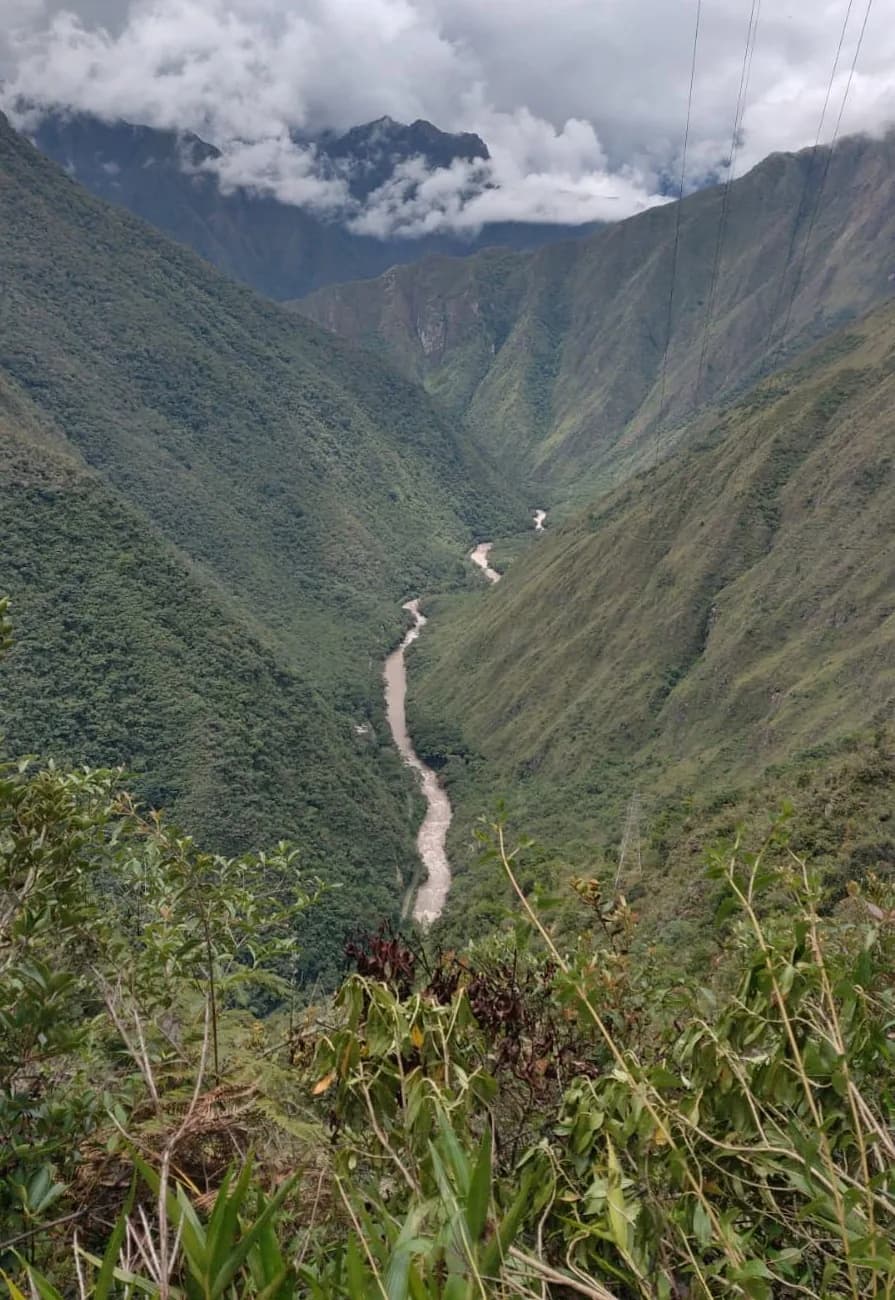
In May 2026, a 53 year old man fell off the short 1-day Inca Trail to his sudden death. Our hearts go out to his family and friends who are mourning the loss of their beloved, Matthew Paton.
It was reported that Mr. Paton may have tripped as he crossed a wooden footbridge, then grabbed the railing which gave way and fell with him over 300 m / 1000 ft into the ravine below. It happened between the final trail checkpoint and the steep stone steps known as "The Gringo Killer." Which is actually not an area where anyone has been harmed. The Gringo Killer is a short stone staircase so steep that most hikers use hands to climb the steps and take photos of each other doing so. Rescue teams were dispatched and eventually found Mr Paton, who did not survive.
This incident has raised awareness of the risks of hiking what appears to be a fairly easy and fun day hike right into the famous Inca citadel. While I've done this hike many times in various seasons and different kinds of weather conditions, our manager, Vidal Jaquehua, and local tour guides in Cusco, have all hiked this trail hundreds of times. This incident raises questions and concerns for visitors anxious about their safety for upcoming hikes.
It's my intention to highlight the various features of the 1-day Inca Trail hike and the terrain, to give people an idea what to expect if they're planning to hike. It's not the first time anyone has died on this trail. But it's not common. I would classify this hiking incident on the Inca Trail as a highly unusual accident, not necessarily an indication of failure to provide a safe setting for hikers, or someone disregarding safe hiking practices.
How many people have died while hiking the 1-day Inca Trail?
There's no official count. Since the 1980s, it's believed that the number of people who lost their lives while hiking the Inca Trail is in single digits. If you count hikers on the more strenuous with slightly higher risk 4 day Inca Trail hike, and including at least 1 porter death, (which would have been on the 4-day hike, not the 1-day hike which doesn't use porters,) the numbers may be 10-11 in total. The average number of hikers per year can reach up to 25,000 since the park separated the permits for 1-day Inca Trail from the permits for 4-Day Inca Trail sometime in the last decade. This increased the number of people on the trail from 500 per day to a maximum of 750 for both trails. And including staff and porters. Overall, the number of fatalities is considered low.
In case you heard about the closure of the 4-day Inca Trail hike on August 19, 2026, go here to find out what happened?
Can hikers leave the Inca Trail if they decide not to finish the hike?
No. Once you get off the train at km 104, there is no turning back. But there are mechanisms in place to prevent someone from beginning the hike before it gets to that point. That's one reason why permits and licensed tour guides are required for this hike. There are stages along the way where people can choose not to do the hike and all Adios Adventure Travel tour guides have the authority to tell a person they can't hike if the tour guide has concerns. This brings up the question about rescue vehicles and choppers scooping up hikers that get into trouble. Not happening folks. That's another reason that having a licensed tour guide is important. They know who to contact and where to go to solve problems on the Inca Trail. There's no roads for vehicles and there's no place for helicopters to land. You can forget your pricey evacuation insurance policy. You're in the hands of your tour guide. Choose wisely!
How do the standards for maintenance of the 1-day Inca Trail hike measure up with other hikes around the world?
After hiking the Inca trail many times over the years, and as recently as March 2026, in my opinion, the trail meets the minimum standards I would expect for a world-class hiking destination. I've hiked Appalachian Trail, Rocky Mountain trails, the Pilgrimage in Spain, high altitude volcanic trails in Ecuador and the trail to the 3 Granite Towers in Torres del Paine National Park. The level of difficulty for hiking the 1-day Inca Trail is well represented in the social media space. There are videos and stories galore from hikers of all ages and abilities. The hike is only accessible to people who pay for a tour operator to acquire the permits and provide the licensed tour guide during the hike. This is not the case for many of the other hikes I've done around the world. Being escorted by a licensed guide cuts down on horseplay or engaging in risky behaviors like running or taking photos from dangerous spots.
Are there hidden dangers for hiking the 1-day Inca Trail to Machu Picchu?
Not preparing yourself and your gear properly for your hike is an obvious way to raise the risk of a mishap. Proper footwear, fitted backpacks, hydration and fitness should be reviewed. But are there any less obvious circumstances that could be a potential hazard to hikers? Being surrounded by nature and taking a break from the modern world is one of the joys of hiking the Inca trail. Like many trails around the world, the 1-day Inca trail is shrouded in lush greenery from the beginning to the end. Trees grow next to the river and give way to smaller plants like shrubs, bushes and ferns as you hike your way up and out of the canyon. The biggest hidden hazard is that you simply can't see the abrupt descending slope right beside the trail. Hikers may not be aware of how close they are to calamity. There's nothing like a visual reminder to keep you on your toes and avoid falling into a comfortable hiking trance.
The second hazard I would point out for the Inca Trail are the rocky paths. The Inca laid rocks of mixed sizes and shapes to prevent erosion and that practice continues today. Let's say that some segments of the trail are laden with trip hazards. Imagine walking down a dry rocky riverbed and you get the idea. I've seen healthy, agile people trip and fall. It happens. And when it rains, the stones can get slippery adding another layer of risk.
It's feasible that hikers get lulled into the enjoyment of being surrounded by open skies, orchids, waterfalls, trees and maybe a hummingbird or two, and forget the rough rocky trails and hidden drop offs. Although it's customary for tour operators to offer the use of trekking poles for all hikes in Peru, there are hikers who choose not to use them. Trekking poles can make a huge difference in maintaining balance on uneven surfaces and reduce the impact on joints when descending switchbacks and trails. We don't know if Mr. Paton was hiking with poles. But if he needed to grab a railing, it's possible he wasn't using trekking poles.
Tips for preparing and safely hiking the 1-day Inca Trail
- evaluate your fitness for hiking at 10,000 ft altitude with 1-2 days to acclimatize
- bring good quality footwear, socks and a well-fitted backpack (large enough to carry everything you need for the 1 day hike and 1 overnight in a hotel)
- follow the pre-departure instructions of your licensed tour operator to acclimatize, stay hydrated, and maintain awareness while you're hiking
- let your tour guide be in charge of your group during the hike
- use a trekking pole during the hike.
- be prepared to complete the hike. If you have any questions about your ability to finish you should discuss with your tour guide in advance. It is possible to stay on the train and not get off at km 104 where the 1-day Inca Trail hike begins. However, in order to make this last minute change, the tour operator needs to notify the train company.
Machu Picchu National Park has it's own count of injuries and deaths which is separate from the Inca Trail hikes. Travelers need to remember they're going to the middle of nowhere in the Andes Mountains. Traveling by trains and buses makes it sound easy, and it is doable for most people. But there are additional things to be aware of when traveling to Peru, like high altitude for instance, that may not apply to travel to other high profile destinations in the world.
To see the full itinerary for the 1-day Inca Trail hike, go here.
Planning a trip for 6 or more?
We design private trips for families with kids, friend groups, clubs, and special-interest groups. Groups of 6+ are our specialty.